
Have you ever wondered why some people thrive in every situation, even when others with the same qualifications struggle? The answer often lies not in IQ or talent, but in Emotional Intelligence (EI) the ability to understand, manage, and use emotions wisely in everyday life.
More than a personality trait, emotional intelligence has become a core success factor in both personal growth and professional performance. It influences how we communicate, handle stress, and connect with others, shaping the very foundation of effective leadership and meaningful relationships.

In this blog, we’ll explore what emotional intelligence truly means, why it matters more than IQ, and how it impacts both your personal life and career success. You’ll learn about the five core components of emotional intelligence, the science behind emotional awareness, and practical ways to build your EQ through daily habits. We’ll also discuss how emotional intelligence shapes leadership, communication, and decision-making in the modern workplace
What Is Emotional Intelligence?
Emotional intelligence is the skill of recognizing, understanding, and managing emotions—both your own and those around you.
The concept gained global attention when Daniel Goleman, a psychologist and author, explained that EQ often predicts success better than IQ.
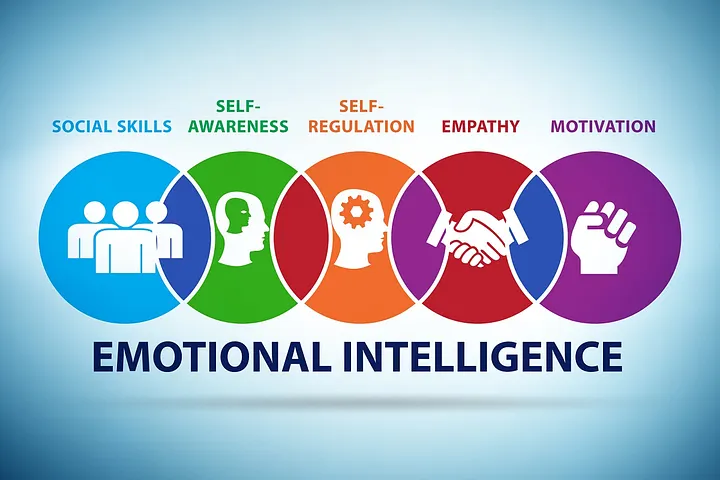
According to Goleman, emotional intelligence includes five key components:
- Self-awareness – Understanding your emotions and their effect on decisions.
- Self-regulation – Staying calm and controlled under pressure.
- Motivation – Staying committed to goals even in tough times.
- Empathy – Recognizing and respecting others’ feelings.
- Communication / Social skills – Building and maintaining positive relationships.
Why Emotional Intelligence Matters More Than Ever
We live in an era where emotional connection drives collaboration. In workplaces, homes, and classrooms, emotional intelligence has become the quiet superpower behind effective communication and strong relationships.
In the Workplace
Professionals with high EQ tend to:
- Communicate with empathy and clarity.
- Build trust and teamwork.
- Handle criticism constructively.
- Lead with confidence and compassion.
According to the Harvard Business Review, nearly 90% of top-performing leaders have strong emotional intelligence. It’s the quality that allows managers to stay calm in crises, encourage innovation, and create supportive work cultures.
In Personal Life
Outside work, emotional intelligence helps you:
- Understand others’ emotions instead of reacting impulsively.
- Manage personal stress and conflicts.
- Strengthen family and social bonds.
- Respond to challenges with patience and empathy.
The Science Behind Emotional Intelligence
Science shows that emotional intelligence develops when the amygdala (the brain’s emotion center) and the prefrontal cortex (the thinking brain) work in balance.
When you pause before reacting, your brain creates space to respond rationally instead of emotionally. Over time, this practice rewires neural pathways, improving focus, patience, and resilience.
That’s why emotionally intelligent people stay calm in stressful meetings or respond with empathy during conflicts they’ve trained their brains to handle emotions thoughtfully.
How to Develop Emotional Intelligence
The best part? Emotional intelligence is a learnable skill.
You can strengthen it with simple daily habits:
1. Build Self-Awareness
Notice how your emotions change throughout the day. Reflect on your triggers and how they influence your actions.
2. Regulate Your Emotions
Practice staying calm before reacting. Breathing exercises, mindfulness, or short breaks help restore emotional balance.
3. Show Empathy
Listen with intention. When people feel heard, communication becomes natural and trust grows.
4. Improve Social Skills
Be approachable, open to feedback, and supportive of others’ ideas. Emotional intelligence thrives in positive interactions.
5. Stay Motivated
Connect your goals to your deeper values. Motivation built on passion creates consistency and long-term success.
Emotional Intelligence in Leadership
Leaders with high EQ create environments where people feel valued and safe to express ideas.
They balance empathy with accountability, driving both performance and well-being.
Emotionally intelligent leaders:
- Inspire confidence during uncertainty.
- Manage conflicts peacefully.
- Encourage growth through feedback.
- Build teams that work with trust, not fear.
In short, emotional intelligence transforms leadership from authority-based to relationship-based a shift every successful organization now values.
Final Thoughts:
In a world obsessed with data and deadlines, emotional intelligence reminds us of something timeless success is as much about how you feel as what you achieve.
It’s the skill that helps you connect, lead, and live with purpose.
Whether you’re managing a business, guiding a team, or simply trying to understand yourself better, emotional intelligence is your quiet advantage. Learn it, live it, and let it shape your story because emotions, when managed wisely, don’t weaken you; they define your true strength.
Such a powerful reminder that emotional intelligence isn’t just a soft skill anymore, it’s a real game changer in personal and professional success! Loved the practical tips on developing EQ.
yeah its not just the soft skills , its a game changer for the womens success .