
Emotional intelligence plays a decisive role in how emotions are understood, managed, and expressed in everyday life. It influences communication, decision-making, and emotional stability in both personal and professional settings. Unlike fixed personality traits, emotional intelligence is a skill that can be developed with consistent practice.
By focusing on three essential steps: self-awareness, emotional regulation, and empathy, emotional intelligence can be strengthened in a clear, practical, and sustainable way.
Understanding Emotional Intelligence
Emotional intelligence, often referred to as Emotional Quotient (EQ), is the ability to recognize emotions, interpret emotional signals, and manage emotional responses effectively. It encompasses internal awareness and social awareness, allowing emotions to inform actions without overwhelming them.
Unlike intellectual intelligence, emotional intelligence governs how individuals respond under stress, communicate during conflict, and navigate complex interpersonal dynamics. These skills influence emotional stability, leadership capacity, and long-term personal growth.
Why Emotional Intelligence Matters Today
Modern workplaces and relationships require emotional clarity. Rapid communication, diverse teams, and high-pressure environments magnify emotional responses. Without emotional intelligence, misunderstandings escalate, stress compounds, and relationships deteriorate.
High emotional intelligence supports calm reasoning, emotional balance, and constructive communication. It strengthens collaboration, enhances trust, and allows individuals to adapt to emotional complexity without losing composure.
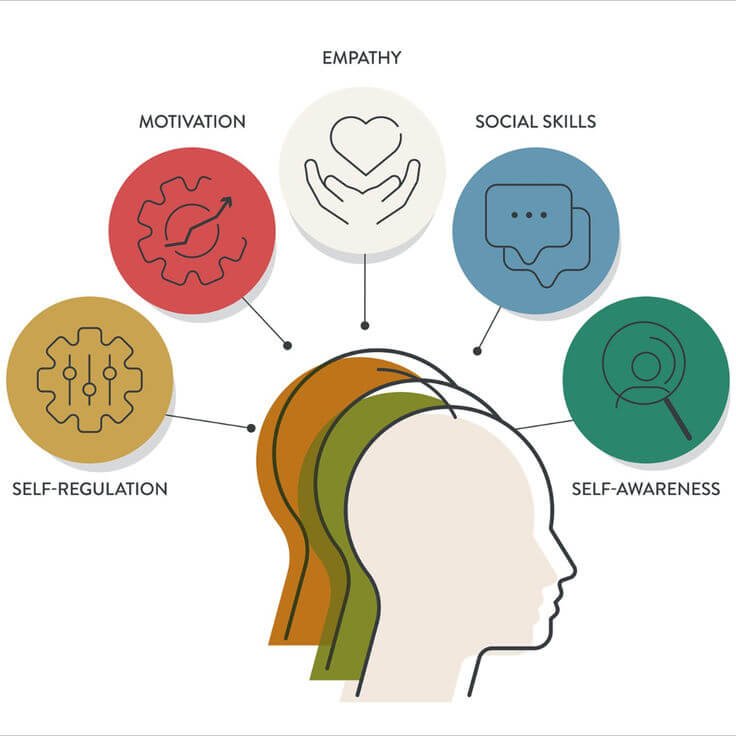
The Psychological Foundation of Emotional Intelligence
Research in cognitive psychology confirms that emotional intelligence relies on identifiable skills rather than abstract traits. Neural pathways associated with emotional regulation and empathy can be reinforced through repeated behavioral patterns.
This adaptability explains why emotional intelligence improves with deliberate practice. Awareness reshapes emotional habits, while regulation and empathy refine emotional behavior over time.
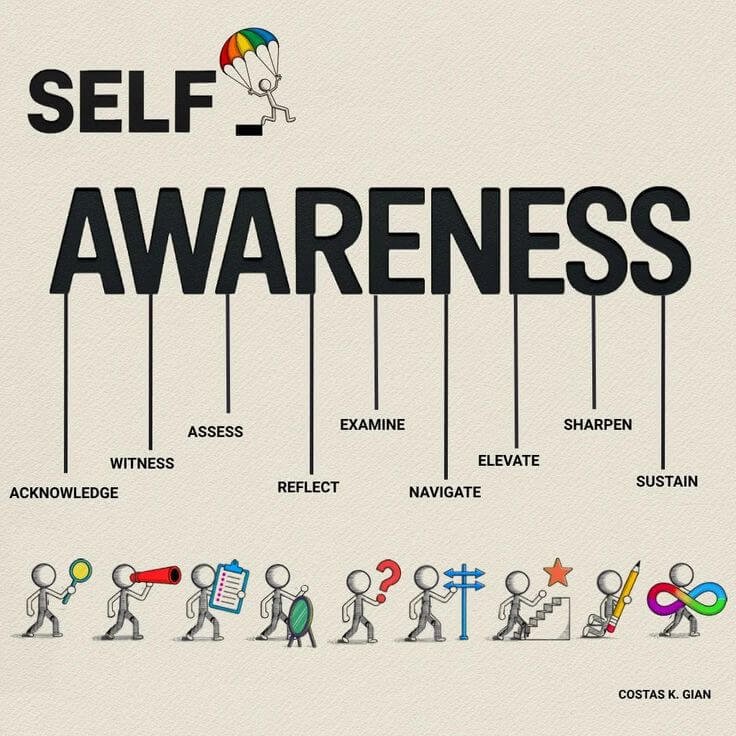
Step One: Build Self-Awareness
Why Self-Awareness Is the Foundation
Self-awareness is the ability to recognize emotions as they arise. It allows individuals to identify emotional states rather than operate on impulse. Without self-awareness, emotions remain automatic and unexamined.
Identifying Emotional Triggers
Emotional triggers are situations that provoke intense or habitual reactions. These triggers often originate from experiences, stress, or unmet expectations. Recognizing them reduces emotional reactivity.
When triggers are identified, emotional responses shift from reflexive to intentional.
Recognizing Emotional Patterns
Emotions often follow recurring cycles. Frustration, anxiety, or withdrawal may appear in predictable contexts. Awareness of these emotional patterns provides clarity and control.
Patterns lose influence once they are observed consistently.
Practicing Mindful Emotional Observation
Mindful observation involves noticing emotions without immediate judgment or suppression. This practice strengthens emotional awareness and reduces internal resistance.
Over time, emotions become clearer, less overwhelming, and easier to manage.
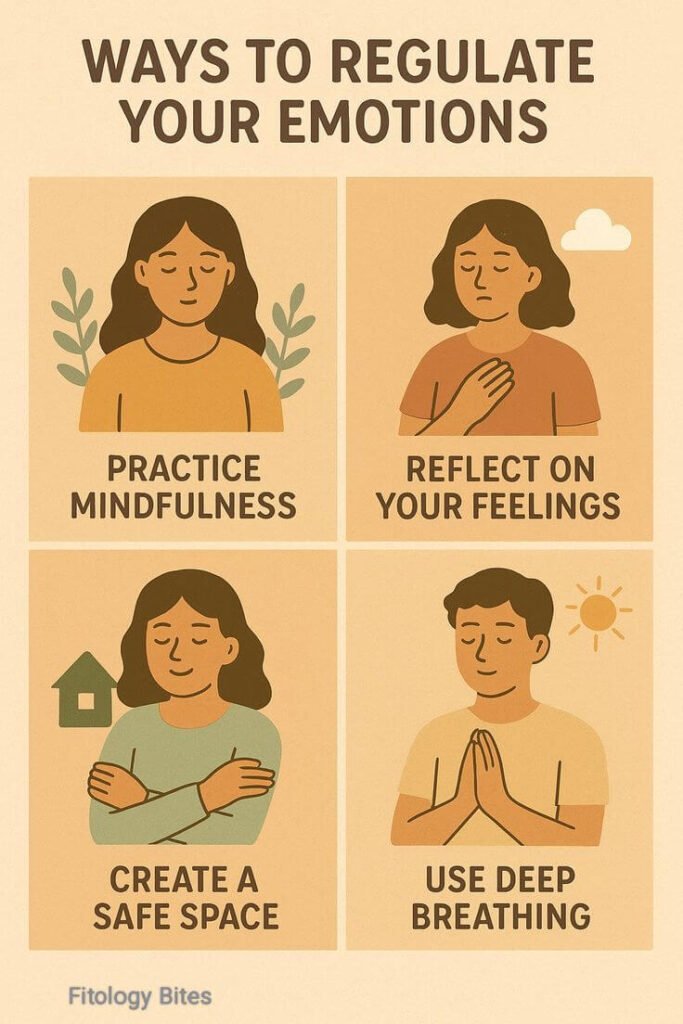
Step Two: Strengthen Emotional Regulation
What Emotional Regulation Means
Emotional regulation refers to the ability to manage emotional intensity without denying emotion. It allows emotions to exist while preventing impulsive reactions.
This skill separates emotional experience from emotional behavior.
Managing Stress and Emotional Pressure
Stress amplifies emotional responses. Emotional regulation relies on techniques such as controlled breathing, reflective pauses, and cognitive reframing.
These techniques restore emotional balance during challenging moments and prevent escalation.
Responding Instead of Reacting
Reaction is immediate and instinctive. Response is deliberate and measured. Emotional intelligence grows in the pause between stimulus and action.
This pause allows rational thought to guide emotional expression.
Developing Emotional Stability
Emotional stability develops gradually through repeated regulation. Each controlled response strengthens resilience and emotional maturity.
Over time, emotional volatility diminishes, replaced by composure and clarity.
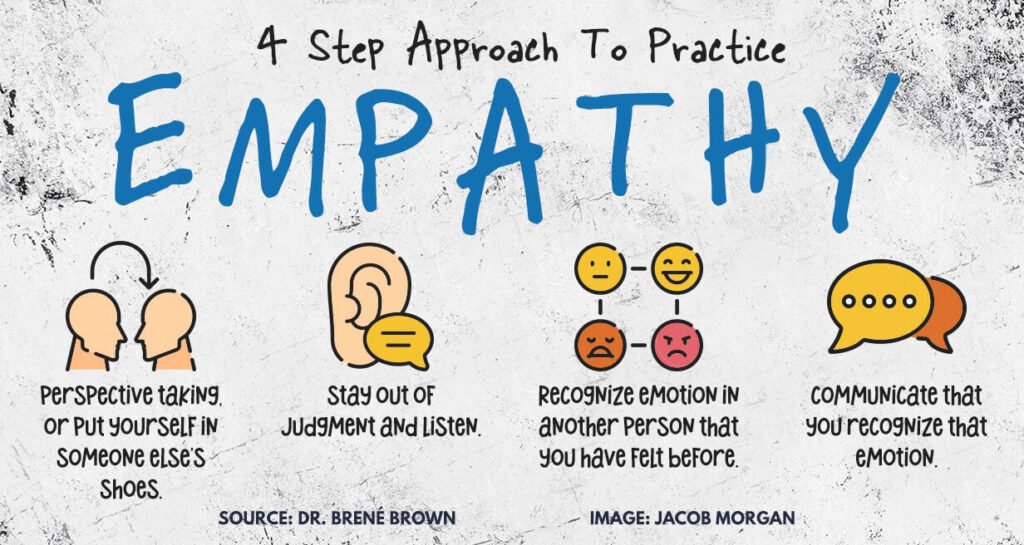
Step Three: Expand Empathy and Social Awareness
Understanding Empathy as a Skill
Empathy is the ability to understand another person’s emotional experience without absorbing it. It differs from sympathy, which focuses on emotional agreement.
Empathy strengthens communication and reduces misunderstanding.
The Importance of Active Listening
Active listening involves attention without interruption. It prioritizes understanding over response. This skill deepens emotional connection and improves interpersonal trust.
Listening with presence is a cornerstone of emotional intelligence.
Improving Interpersonal Relationships
Empathy and social awareness enhance relationship quality. They reduce emotional friction and encourage mutual respect.
Strong relationships rely on emotional understanding rather than assumption.
Emotional Intelligence in Daily Life and Work
In professional settings, emotional intelligence supports leadership, teamwork, and conflict resolution. In personal life, it encourages patience, emotional security, and meaningful connection.Across contexts, emotional intelligence promotes stability and thoughtful interaction.
Long-Term Benefits of Emotional Intelligence
Sustained emotional intelligence leads to improved mental clarity, reduced stress, and healthier relationships. Decision-making becomes balanced rather than emotionally driven.
Over time, emotional intelligence shapes a composed and adaptive mindset.
Practical Habits That Strengthen Emotional Intelligence
Daily reflection, emotional journaling, mindful pauses, and empathetic listening reinforce emotional growth. These habits reshape emotional responses and build lasting awareness.
Consistency transforms emotional intelligence from effort into instinct.
Frequently Asked Questions
What is emotional intelligence?
Emotional intelligence is the ability to recognize, understand, and manage emotions while responding effectively to the emotions of others. It includes self-awareness, emotional regulation, empathy, and social skills.
Can emotional intelligence be improved?
Yes. Emotional intelligence develops through awareness, practice, and behavioral consistency. Psychological research confirms that emotional skills strengthen over time with intentional effort.
Why is emotional intelligence important?
Emotional intelligence improves communication, emotional stability, and decision-making. It supports healthier relationships, better stress management, and stronger leadership capabilities.
How long does it take to improve emotional intelligence?
Improvement varies by individual. Small changes may appear within weeks, while lasting emotional intelligence develops through continuous practice over months.
How does emotional intelligence help relationships?
Emotional intelligence enhances empathy, reduces conflict, and encourages understanding. It allows emotions to be expressed constructively, strengthening trust and emotional connection.
Conclusion
Emotional intelligence is a skill that evolves through awareness, regulation, and empathy. By practicing these three steps consistently, emotional understanding deepens and emotional behavior becomes more intentional. Over time, emotional intelligence transforms how emotions are experienced, expressed, and understood.
.Emotional Intelligence (EQ) is often the ‘hidden’ factor in high-performing teams. This article perfectly outlines why technical skills aren’t enough in today’s complex work environments.”
yeah this article help you alot to increase your emotional intelligence
This article helps me a lot and and understands the relationship maintenance.
Gamebet3 is alright. Not the flashiest site, but it gets the job done. Decent odds, nothing too crazy. Worth a look if you’re shopping around. gamebet3